Sony Media C-80 Unidirectional Studio Condenser Microphone with Advanced Capsule Technology
Sony Media C-80 Unidirectional Studio Condenser Microphone with Advanced Capsule Technology
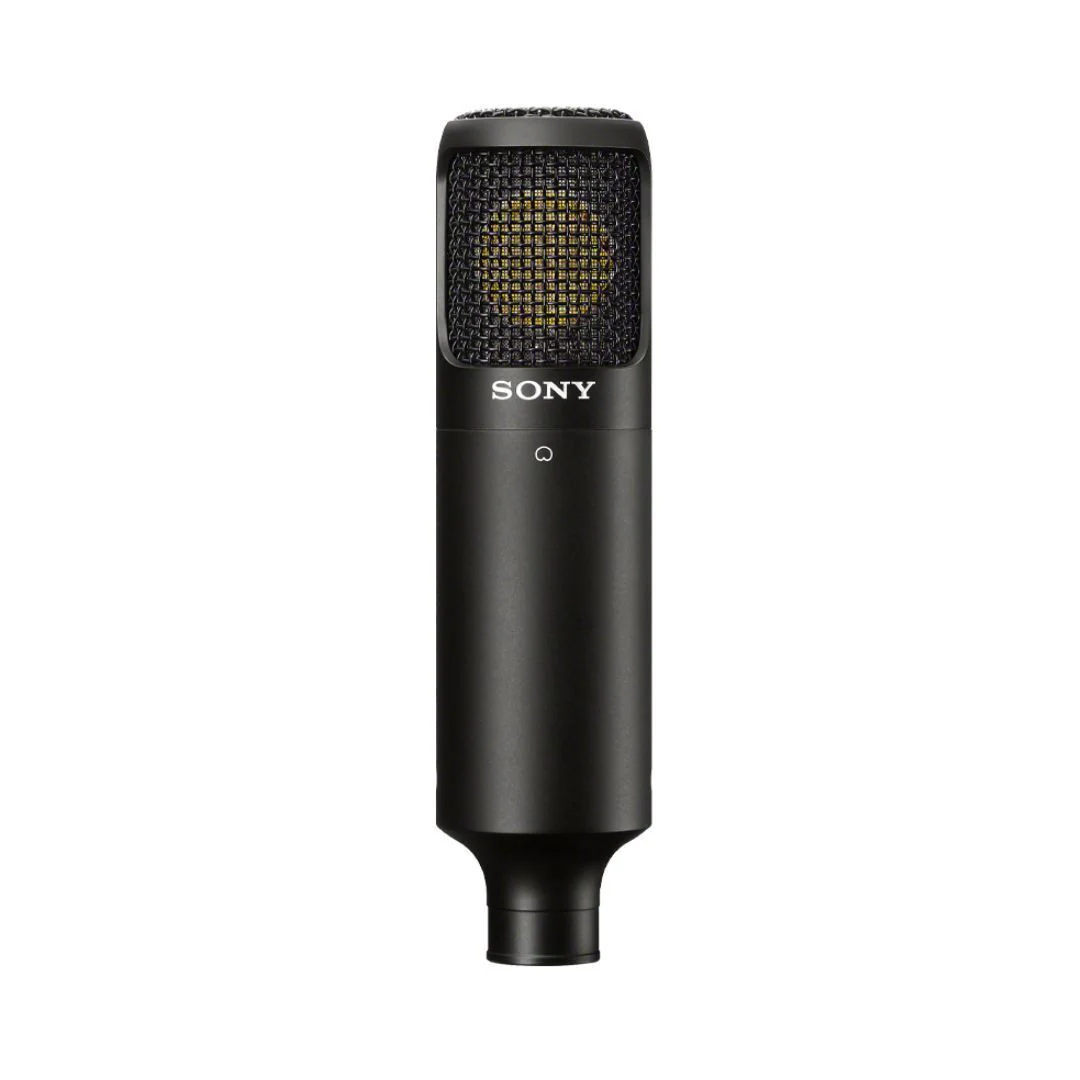
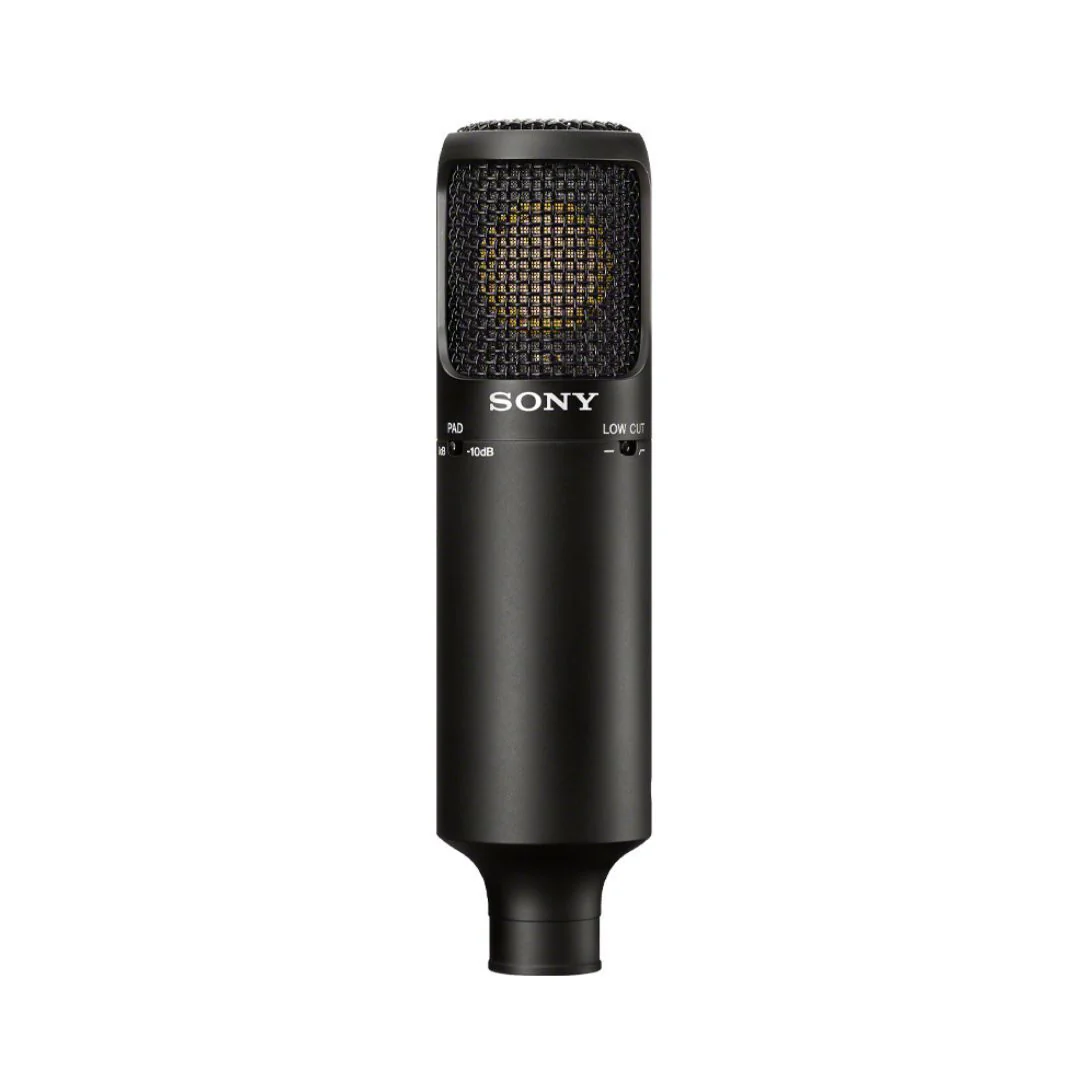
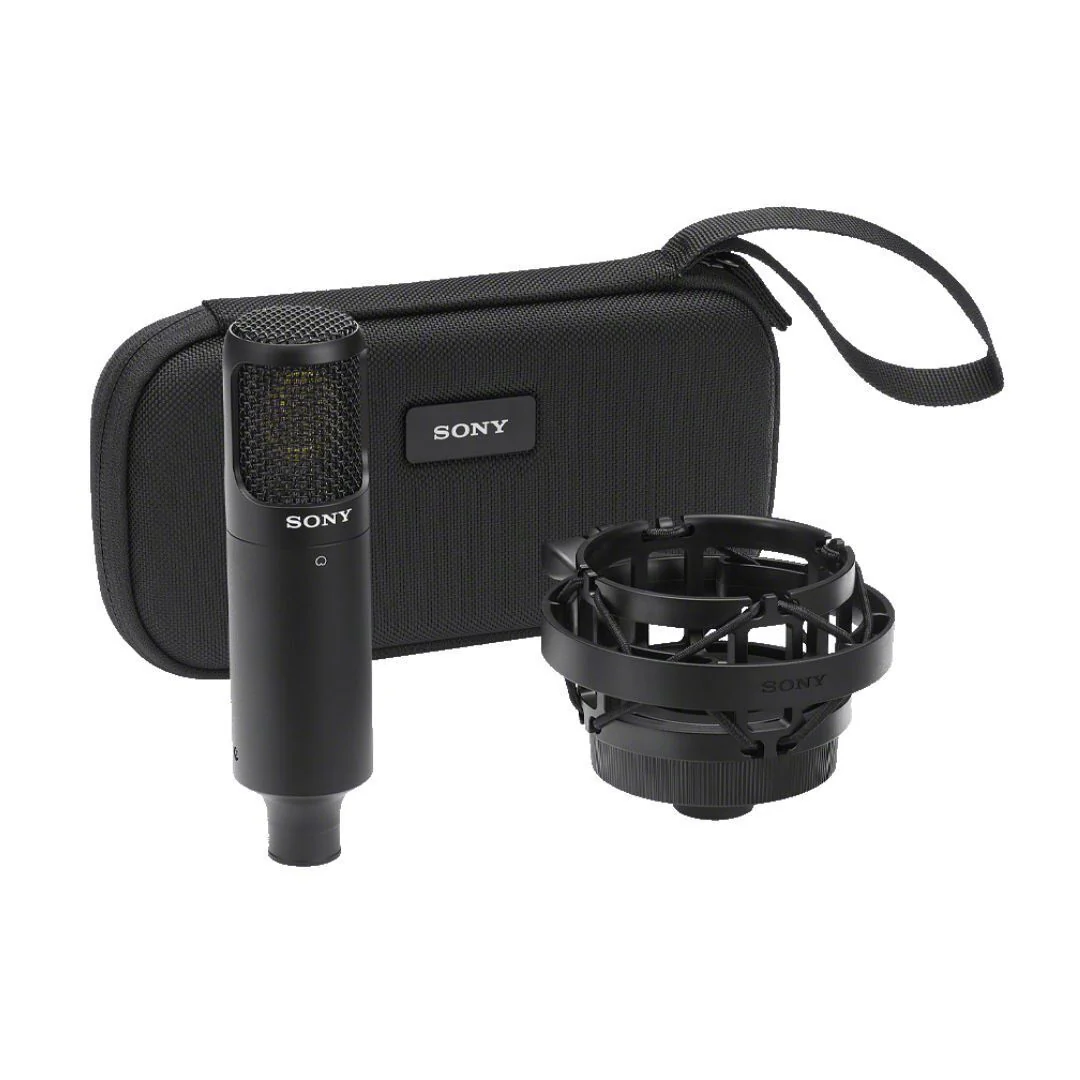
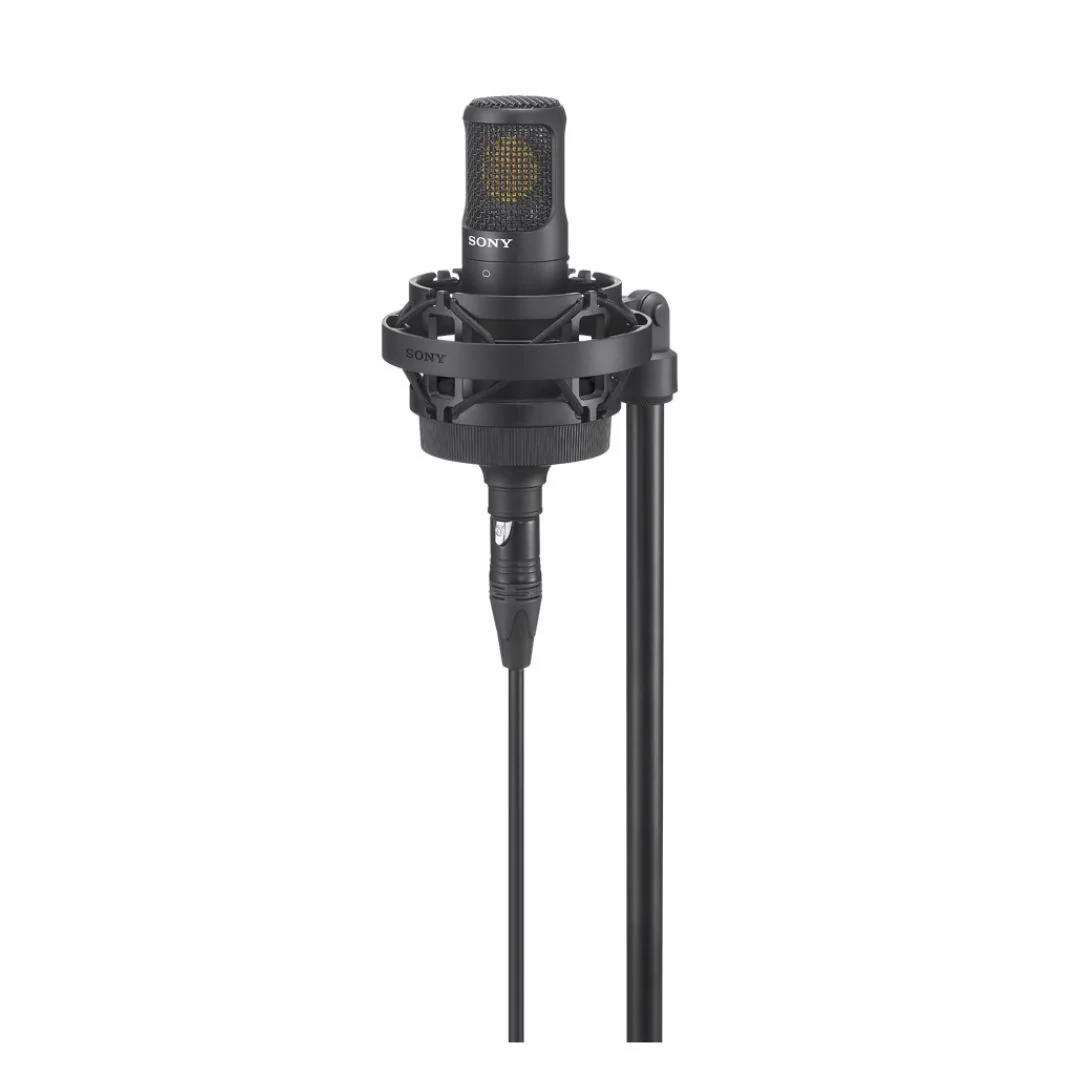
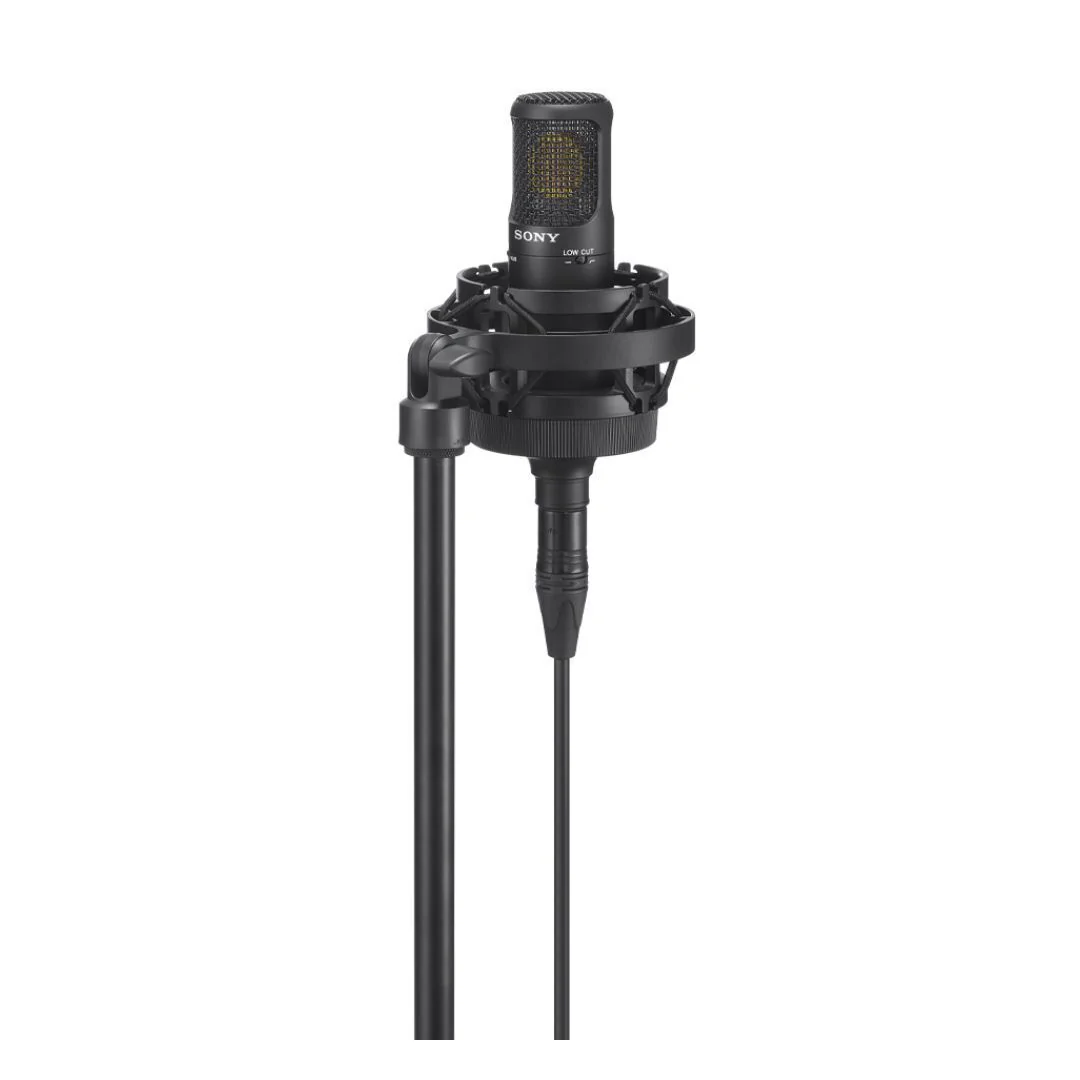
The next go-to home Sony Media C-80 Studio Microphone is a
unidirectional condenser microphone that can be used for a variety of recording
situations in a home studio, including recording vocals or voice and acoustic
instruments such as guitar or piano.
For the Music
Sony brings you closer to the music and the artists you love. Based on the
microphone capsule of the C-100 and using the same diaphragm material as the
C-800G, the C-80 has a peak characteristic of around 13 kHz, making vocal or
voice presence stand out among other instrument sounds. It features a strong
presence and rich reproduction of low and mid frequencies. Dual diaphragms
reduce the proximity effect. Natural vocal and voice recording is possible even
when vocalization is made at a position close to the microphone. In addition, a
low-cut filter to eliminate unwanted low-frequency noise and a pad switch
function to minimize distortion caused by excessive input sound is equipped for
recording in a home studio.
Vocal
Tight and rich mid-range capture provides a vocal sound with a clear core
and presence, allowing vocals to stand out even when mixed with other
instrumental sounds. The high-frequency range with a sense of loss reproduces
even the finest nuances, such as delicate breathing. The overall
straightforward and natural sound does not require complex post-processing.
Instruments
In recordings of acoustic guitars and pianos, the characteristics of the
instruments, such as the scrape of guitar strings and the resonance of the
body, are realistically reproduced with a firm, extended low-end, and natural
overall balance. The dynamic and dense sound also brings the instruments closer
to the listener.
Voice
Natural and clear voice recording is achieved by suppressing boomy low
frequency and noise when vocalization is made close to the microphone. The
forward-focused directional characteristics and low-cut filter prevent the
microphone from picking up ambient and low-frequency noise, making it suitable
for live broadcasts.
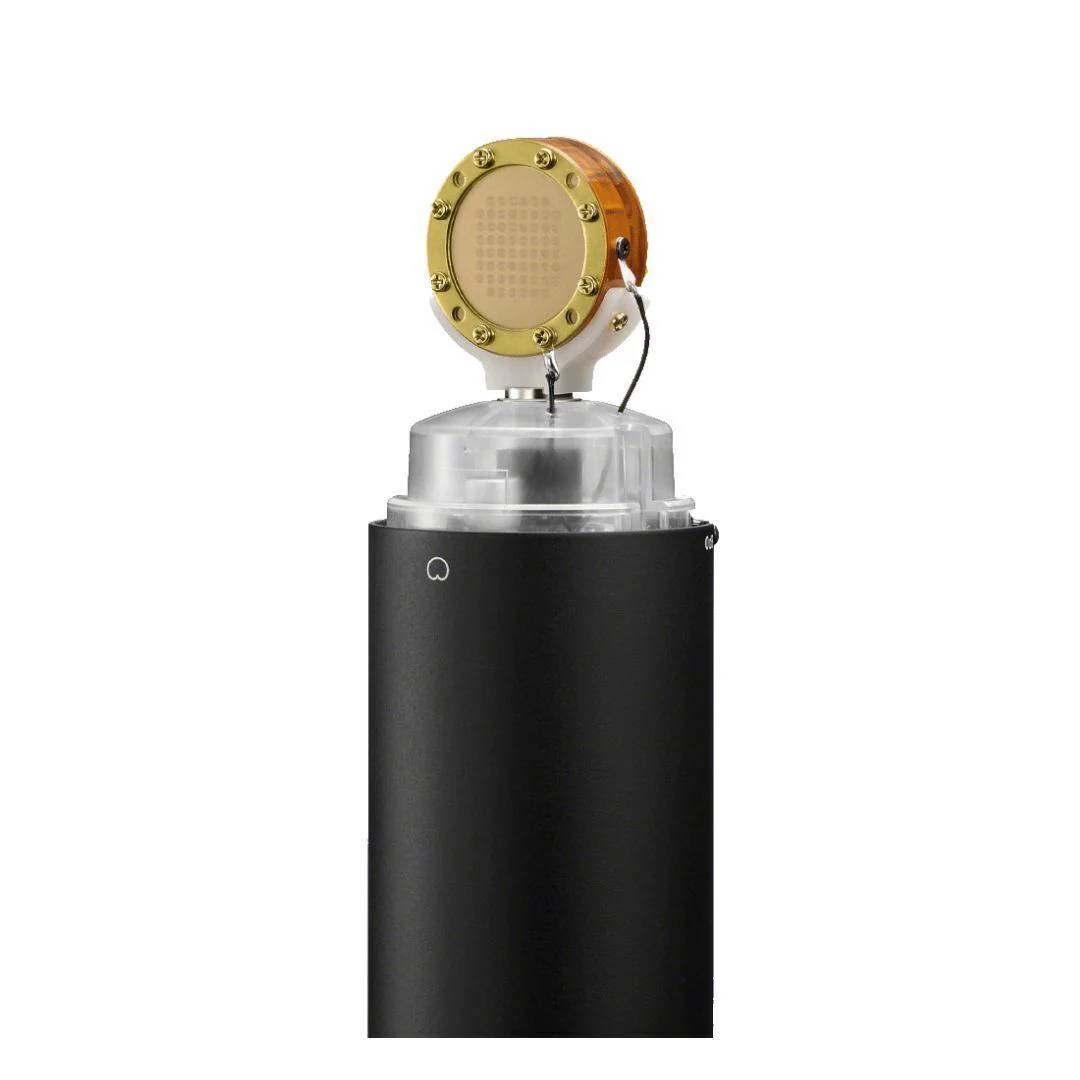
Capsule of C-80
Following the microphone capsule for the C-100, which has an established
reputation for high sound quality, a new microphone capsule for the C-80 has
been developed. The acoustic impedance of the back plate has been reduced to
achieve higher sensitivity. Insulation structure material made of
high-strength, high-insulation polyetherimide (PEI) with high-precision resin
machining is used for the capsule case and back electrode, and brass with
high-precision machining is used for the capsule case and back electrode. The
diaphragm membrane is coated with 24-carat gold vapor deposition. By assembling
and processing these materials with high precision, a high-precision,
high-purity, low-distortion sound is realized. On the back of the capsule, an
‘acoustic shifting circuit’ is employed to adjust not only the sound quality
collected from the surface but also the sound quality collected from the rear
side to achieve a unidirectional characteristic. In addition, a diaphragm is
also placed on the rear side to suppress the proximity effect (dual diaphragm
structure).
Microphone case
High specific gravity zinc die-cast is used to ensure anti-vibration and
vibration-damping properties.
Mesh
The same material as that used for C-100 was selected because it affects
the extension of the high frequency range and sound damping.
Sleeve
High specific gravity zinc die-cast is used to ensure anti-vibration and
vibration-damping properties.
Reflector
To minimize the influence of unwanted reflected waves on sound quality, a
material with low intrinsic sound and habitual characteristics was selected.
More Images
Sony Media C-80 Unidirectional Studio Condenser Microphone with Advanced Capsule Technology
The next go-to home Sony Media C-80 Studio Microphone is a
unidirectional condenser microphone that can be used for a variety of recording
situations in a home studio, including recording vocals or voice and acoustic
instruments such as guitar or piano.
For the Music
Sony brings you closer to the music and the artists you love. Based on the
microphone capsule of the C-100 and using the same diaphragm material as the
C-800G, the C-80 has a peak characteristic of around 13 kHz, making vocal or
voice presence stand out among other instrument sounds. It features a strong
presence and rich reproduction of low and mid frequencies. Dual diaphragms
reduce the proximity effect. Natural vocal and voice recording is possible even
when vocalization is made at a position close to the microphone. In addition, a
low-cut filter to eliminate unwanted low-frequency noise and a pad switch
function to minimize distortion caused by excessive input sound is equipped for
recording in a home studio.
Vocal
Tight and rich mid-range capture provides a vocal sound with a clear core
and presence, allowing vocals to stand out even when mixed with other
instrumental sounds. The high-frequency range with a sense of loss reproduces
even the finest nuances, such as delicate breathing. The overall
straightforward and natural sound does not require complex post-processing.
Instruments
In recordings of acoustic guitars and pianos, the characteristics of the
instruments, such as the scrape of guitar strings and the resonance of the
body, are realistically reproduced with a firm, extended low-end, and natural
overall balance. The dynamic and dense sound also brings the instruments closer
to the listener.
Voice
Natural and clear voice recording is achieved by suppressing boomy low
frequency and noise when vocalization is made close to the microphone. The
forward-focused directional characteristics and low-cut filter prevent the
microphone from picking up ambient and low-frequency noise, making it suitable
for live broadcasts.
Capsule of C-80
Following the microphone capsule for the C-100, which has an established
reputation for high sound quality, a new microphone capsule for the C-80 has
been developed. The acoustic impedance of the back plate has been reduced to
achieve higher sensitivity. Insulation structure material made of
high-strength, high-insulation polyetherimide (PEI) with high-precision resin
machining is used for the capsule case and back electrode, and brass with
high-precision machining is used for the capsule case and back electrode. The
diaphragm membrane is coated with 24-carat gold vapor deposition. By assembling
and processing these materials with high precision, a high-precision,
high-purity, low-distortion sound is realized. On the back of the capsule, an
‘acoustic shifting circuit’ is employed to adjust not only the sound quality
collected from the surface but also the sound quality collected from the rear
side to achieve a unidirectional characteristic. In addition, a diaphragm is
also placed on the rear side to suppress the proximity effect (dual diaphragm
structure).
Microphone case
High specific gravity zinc die-cast is used to ensure anti-vibration and
vibration-damping properties.
Mesh
The same material as that used for C-100 was selected because it affects
the extension of the high frequency range and sound damping.
Sleeve
High specific gravity zinc die-cast is used to ensure anti-vibration and
vibration-damping properties.
Reflector
To minimize the influence of unwanted reflected waves on sound quality, a
material with low intrinsic sound and habitual characteristics was selected.
Product Information
Product Information
Shipping & Returns
Shipping & Returns
Description
The next go-to home Sony Media C-80 Studio Microphone is a
unidirectional condenser microphone that can be used for a variety of recording
situations in a home studio, including recording vocals or voice and acoustic
instruments such as guitar or piano.
For the Music
Sony brings you closer to the music and the artists you love. Based on the
microphone capsule of the C-100 and using the same diaphragm material as the
C-800G, the C-80 has a peak characteristic of around 13 kHz, making vocal or
voice presence stand out among other instrument sounds. It features a strong
presence and rich reproduction of low and mid frequencies. Dual diaphragms
reduce the proximity effect. Natural vocal and voice recording is possible even
when vocalization is made at a position close to the microphone. In addition, a
low-cut filter to eliminate unwanted low-frequency noise and a pad switch
function to minimize distortion caused by excessive input sound is equipped for
recording in a home studio.
Vocal
Tight and rich mid-range capture provides a vocal sound with a clear core
and presence, allowing vocals to stand out even when mixed with other
instrumental sounds. The high-frequency range with a sense of loss reproduces
even the finest nuances, such as delicate breathing. The overall
straightforward and natural sound does not require complex post-processing.
Instruments
In recordings of acoustic guitars and pianos, the characteristics of the
instruments, such as the scrape of guitar strings and the resonance of the
body, are realistically reproduced with a firm, extended low-end, and natural
overall balance. The dynamic and dense sound also brings the instruments closer
to the listener.
Voice
Natural and clear voice recording is achieved by suppressing boomy low
frequency and noise when vocalization is made close to the microphone. The
forward-focused directional characteristics and low-cut filter prevent the
microphone from picking up ambient and low-frequency noise, making it suitable
for live broadcasts.
Capsule of C-80
Following the microphone capsule for the C-100, which has an established
reputation for high sound quality, a new microphone capsule for the C-80 has
been developed. The acoustic impedance of the back plate has been reduced to
achieve higher sensitivity. Insulation structure material made of
high-strength, high-insulation polyetherimide (PEI) with high-precision resin
machining is used for the capsule case and back electrode, and brass with
high-precision machining is used for the capsule case and back electrode. The
diaphragm membrane is coated with 24-carat gold vapor deposition. By assembling
and processing these materials with high precision, a high-precision,
high-purity, low-distortion sound is realized. On the back of the capsule, an
‘acoustic shifting circuit’ is employed to adjust not only the sound quality
collected from the surface but also the sound quality collected from the rear
side to achieve a unidirectional characteristic. In addition, a diaphragm is
also placed on the rear side to suppress the proximity effect (dual diaphragm
structure).
Microphone case
High specific gravity zinc die-cast is used to ensure anti-vibration and
vibration-damping properties.
Mesh
The same material as that used for C-100 was selected because it affects
the extension of the high frequency range and sound damping.
Sleeve
High specific gravity zinc die-cast is used to ensure anti-vibration and
vibration-damping properties.
Reflector
To minimize the influence of unwanted reflected waves on sound quality, a
material with low intrinsic sound and habitual characteristics was selected.