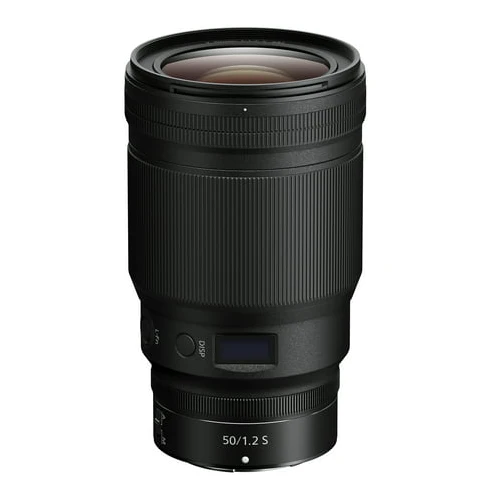
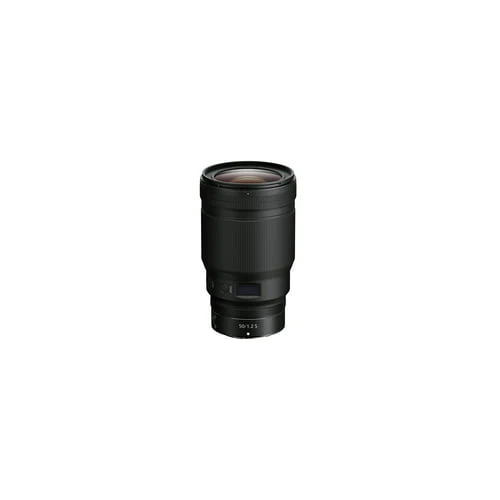
Nikon NIKKOR Z 50mm f/1.2 S Lens
The NIKKOR Z 50mm f/1.2 S bears the S-Line designation reserved for premium NIKKOR Z lenses with the most advanced optics, superior performance and finest craftsmanship. Anti-reflective Nano Crystal Coat and ARNEO coatings virtually eliminate flare, ghosting and coma by suppressing incidental light coming from any direction. The lens offers f/1.2 max aperture with no light falloff and a dreamlike bokeh effect. It also offers breakthrough autofocus powered by dual stepping motors and virtually zero aberrations, glare or distortion.
Multi-Focus System
Rather than moving one large group of lens elements back and forth, the NIKKOR Z 50mm f/1.2 S's multi-focus system moves two smaller groups half the distance. And rather than using a single powerful—but noisy and battery-draining—ultrasonic motor, the NIKKOR Z 50mm f/1.2 S uses two smaller energy efficient STM stepping motors to provide faster, quieter, more precise AF operation—a first for an f/1.2 lens.
ARNEO Coat
ARNEO Coat is an anti-reflective coating developed by Nikon and used in conjunction with Nano Crystal Coat to further reduce ghost and flare effects caused by incident light entering the lens vertically. This allows for the outstandingly clear capture of images even when a light source is located within the frame.
Electromagnetic Diaphragm Mechanism
An electromagnetic diaphragm mechanism in the lens barrel provides highly accurate electronic diaphragm or aperture blade control when using auto exposure during continuous shooting. With conventional D/G type lenses, the diaphragm blades are operated by mechanical linkage levers.
ED (Extra-Low Dispersion) Glass
An optical glass developed by Nikon that is used with normal optical glass in telephoto lenses to obtain optimum correction of chromatic aberrations.
Nano Crystal Coat
Nano Crystal is an anti-reflective coating developed by Nikon that virtually eliminates internal lens element reflections across a wide range of wavelengths. It solves ghost effects caused by red light and effectively reduces ghost and flare caused by light entering the lens diagonally.
Aspherical Lens
The Nikon NIKKOR Z 14-24mm f/2.8 S lens uses aspherical elements that minimize coma and other types of lens aberrations, even when used at the widest aperture. They are particularly useful in correcting distortion in wide-angle lenses and help contribute to a lighter, more compact design by reducing the number of standard (spherical) elements necessary. Aspherical lens elements correct these distortions by continuously changing the refractive index from the center of the lens.
More Images
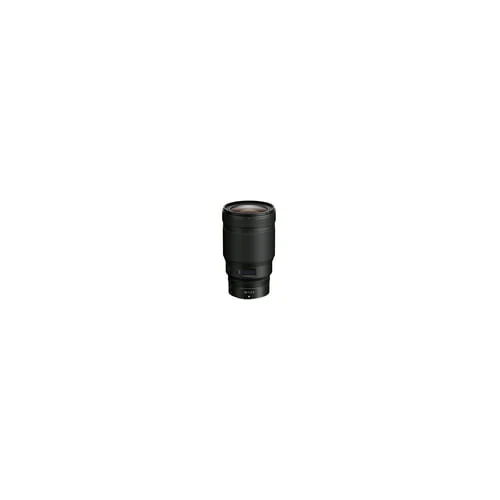


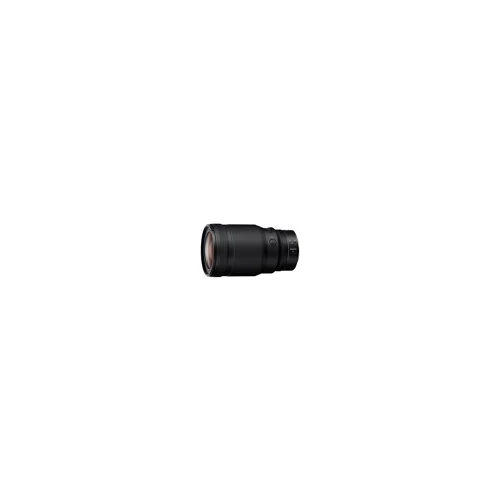


Nikon NIKKOR Z 50mm f/1.2 S Lens
The NIKKOR Z 50mm f/1.2 S bears the S-Line designation reserved for premium NIKKOR Z lenses with the most advanced optics, superior performance and finest craftsmanship. Anti-reflective Nano Crystal Coat and ARNEO coatings virtually eliminate flare, ghosting and coma by suppressing incidental light coming from any direction. The lens offers f/1.2 max aperture with no light falloff and a dreamlike bokeh effect. It also offers breakthrough autofocus powered by dual stepping motors and virtually zero aberrations, glare or distortion.
Multi-Focus System
Rather than moving one large group of lens elements back and forth, the NIKKOR Z 50mm f/1.2 S's multi-focus system moves two smaller groups half the distance. And rather than using a single powerful—but noisy and battery-draining—ultrasonic motor, the NIKKOR Z 50mm f/1.2 S uses two smaller energy efficient STM stepping motors to provide faster, quieter, more precise AF operation—a first for an f/1.2 lens.
ARNEO Coat
ARNEO Coat is an anti-reflective coating developed by Nikon and used in conjunction with Nano Crystal Coat to further reduce ghost and flare effects caused by incident light entering the lens vertically. This allows for the outstandingly clear capture of images even when a light source is located within the frame.
Electromagnetic Diaphragm Mechanism
An electromagnetic diaphragm mechanism in the lens barrel provides highly accurate electronic diaphragm or aperture blade control when using auto exposure during continuous shooting. With conventional D/G type lenses, the diaphragm blades are operated by mechanical linkage levers.
ED (Extra-Low Dispersion) Glass
An optical glass developed by Nikon that is used with normal optical glass in telephoto lenses to obtain optimum correction of chromatic aberrations.
Nano Crystal Coat
Nano Crystal is an anti-reflective coating developed by Nikon that virtually eliminates internal lens element reflections across a wide range of wavelengths. It solves ghost effects caused by red light and effectively reduces ghost and flare caused by light entering the lens diagonally.
Aspherical Lens
The Nikon NIKKOR Z 14-24mm f/2.8 S lens uses aspherical elements that minimize coma and other types of lens aberrations, even when used at the widest aperture. They are particularly useful in correcting distortion in wide-angle lenses and help contribute to a lighter, more compact design by reducing the number of standard (spherical) elements necessary. Aspherical lens elements correct these distortions by continuously changing the refractive index from the center of the lens.
Product Information
Product Information
Shipping & Returns
Shipping & Returns
Description
The NIKKOR Z 50mm f/1.2 S bears the S-Line designation reserved for premium NIKKOR Z lenses with the most advanced optics, superior performance and finest craftsmanship. Anti-reflective Nano Crystal Coat and ARNEO coatings virtually eliminate flare, ghosting and coma by suppressing incidental light coming from any direction. The lens offers f/1.2 max aperture with no light falloff and a dreamlike bokeh effect. It also offers breakthrough autofocus powered by dual stepping motors and virtually zero aberrations, glare or distortion.
Multi-Focus System
Rather than moving one large group of lens elements back and forth, the NIKKOR Z 50mm f/1.2 S's multi-focus system moves two smaller groups half the distance. And rather than using a single powerful—but noisy and battery-draining—ultrasonic motor, the NIKKOR Z 50mm f/1.2 S uses two smaller energy efficient STM stepping motors to provide faster, quieter, more precise AF operation—a first for an f/1.2 lens.
ARNEO Coat
ARNEO Coat is an anti-reflective coating developed by Nikon and used in conjunction with Nano Crystal Coat to further reduce ghost and flare effects caused by incident light entering the lens vertically. This allows for the outstandingly clear capture of images even when a light source is located within the frame.
Electromagnetic Diaphragm Mechanism
An electromagnetic diaphragm mechanism in the lens barrel provides highly accurate electronic diaphragm or aperture blade control when using auto exposure during continuous shooting. With conventional D/G type lenses, the diaphragm blades are operated by mechanical linkage levers.
ED (Extra-Low Dispersion) Glass
An optical glass developed by Nikon that is used with normal optical glass in telephoto lenses to obtain optimum correction of chromatic aberrations.
Nano Crystal Coat
Nano Crystal is an anti-reflective coating developed by Nikon that virtually eliminates internal lens element reflections across a wide range of wavelengths. It solves ghost effects caused by red light and effectively reduces ghost and flare caused by light entering the lens diagonally.
Aspherical Lens
The Nikon NIKKOR Z 14-24mm f/2.8 S lens uses aspherical elements that minimize coma and other types of lens aberrations, even when used at the widest aperture. They are particularly useful in correcting distortion in wide-angle lenses and help contribute to a lighter, more compact design by reducing the number of standard (spherical) elements necessary. Aspherical lens elements correct these distortions by continuously changing the refractive index from the center of the lens.