✨ New Arrivals Just Dropped!Explore

HomeStore
Celestron Nebula Schott B270 Glass Filter for Celestron Origin Intelligent Home Observatory
Celestron Nebula Schott B270 Glass Filter for Celestron Origin Intelligent Home Observatory
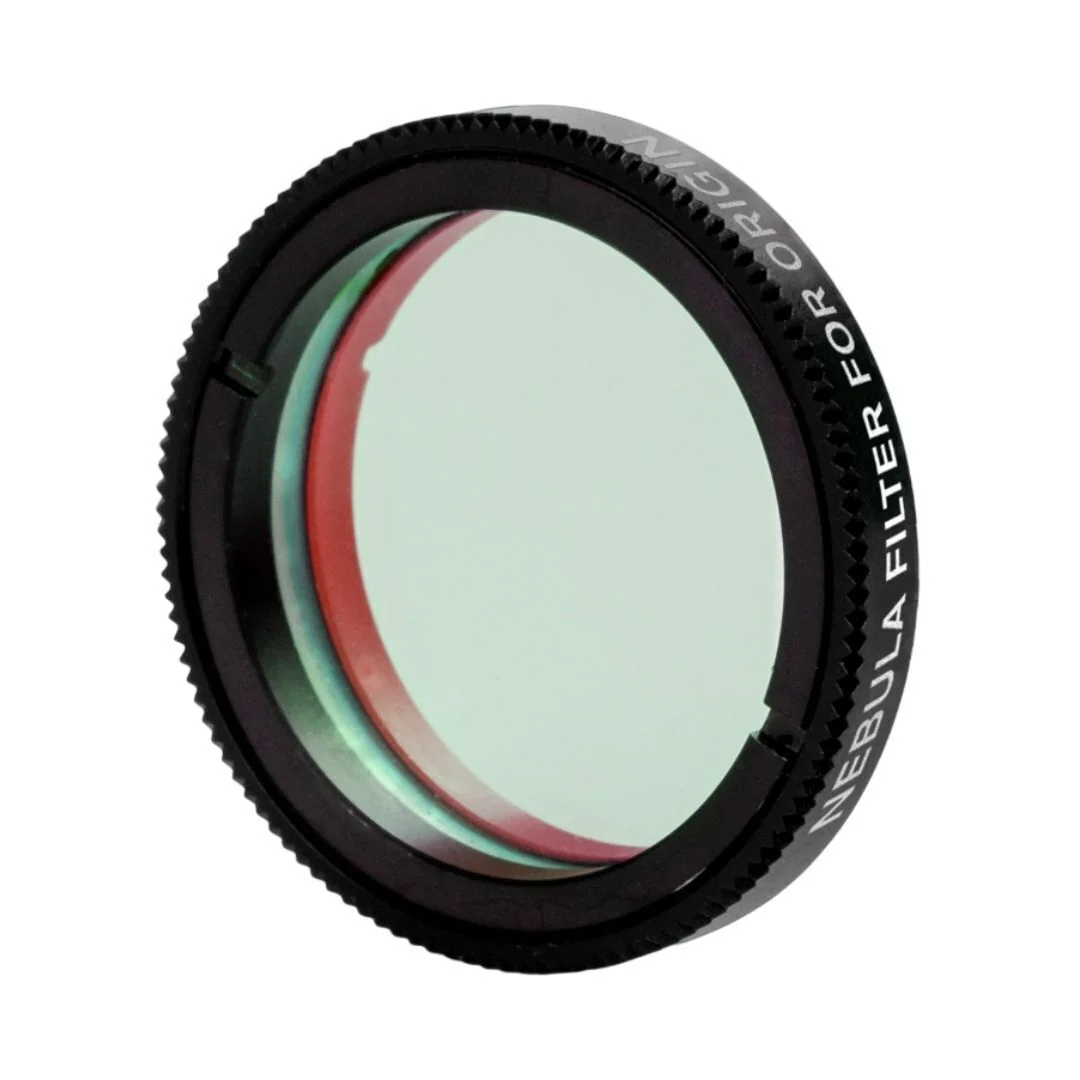
Enjoy the most dazzling views of nebulae with your Celestron Origin when you add this H-alpha H-beta OIII (Hα-Hβ-OIII) imaging filter. This specialized filter allows high throughput of light wavelengths in emission nebulae while blocking other wavelengths that could diminish image quality and detail. The result is bright, colorful nebulae images that ‘pop’ with detail against the black sky background. This filter’s surface is 100 percent optically flat and free from defects.
How It Works
Emission nebulae primarily emit at discrete wavelengths of light - Hα at 656nm, Hβ at 486nm, and OIII at 496/501nm. By strategically transmitting only these wavelengths of light and blocking the rest of the spectrum, the filter dramatically reduces the effect of light pollution. The ‘bad’ light is blocked while the ‘good’ light associated with emission nebulae passes through to Origin’s sensor. You’ll immediately notice much higher contrast in your images, especially from your light-polluted backyard. And since the transmission at the critical wavelengths is so high, the nebula will not be dimmed - only the background will be blacker. You’ll also notice some contrast improvement in images of nebulae from darker skies, as the filter serves well in blocking natural skyglow.
Perfect Fit
The Nebula Filter is perfect for imaging emission nebulae like the North America Nebula (NGC 7000), Lagoon Nebula (M8), Orion Nebula (M42), the Carina Nebula (NGC 3372), and dozens more. The imaging filter offers maximum light transmission in the key Hα-Hβ-OIII wavelengths, producing high contrast for emission nebulae like these. The transmission spectrum for the Nebula Filter is 85 percent or greater at key wavelengths (486nm, 496nm or 501nm, 656nm) and less than 0.5 percent transmission elsewhere. As a narrowband filter, it blocks much of the visible spectrum and only lets these specific wavelengths through. Because of this, you should not use this filter while observing or imaging broadband emission objects, such as galaxies and star clusters. For those objects, you’ll achieve the best results by removing the nebula filter and reinstalling Origin’s clear optical window. Other similar imaging filters on the market have much narrower bandpasses at the critical Hα-Hβ-OIII wavelengths. Unfortunately, these filters block much of the incoming Hα-Hβ-OIII light for an f/2.2 optical system like Origin’s 6-inch RASA. This is because a RASA brings light into the filter at a steeper angle, which causes a spectral shift. If you use filters not explicitly designed for use at f/2.2, some of the light from the nebula will be blocked, resulting in a dimmer image. The Nebula Filter for Origin was custom-engineered to work at f/2.2, so none of the ‘good’ light from the nebula is inadvertently blocked by the filter.
Body and Storage
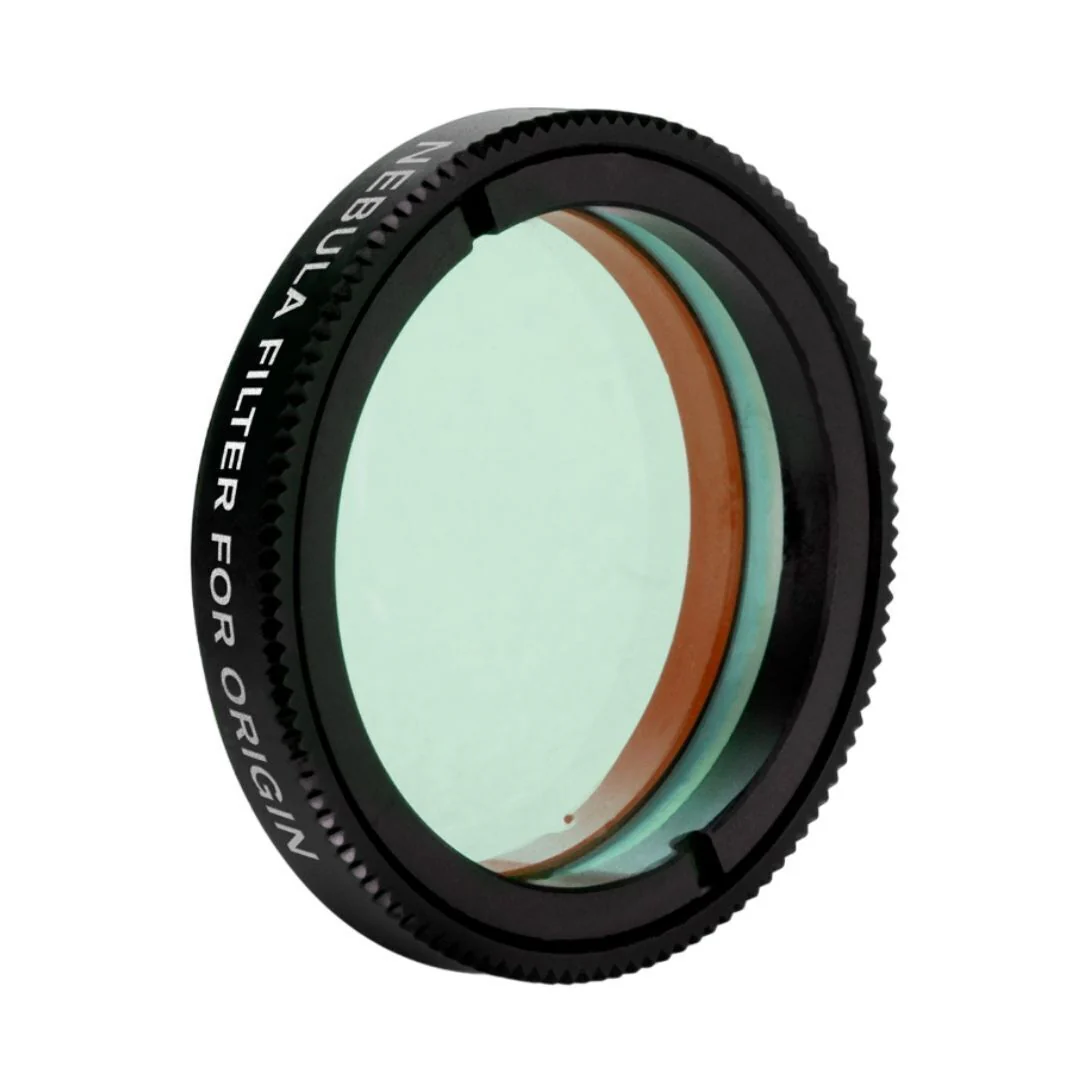
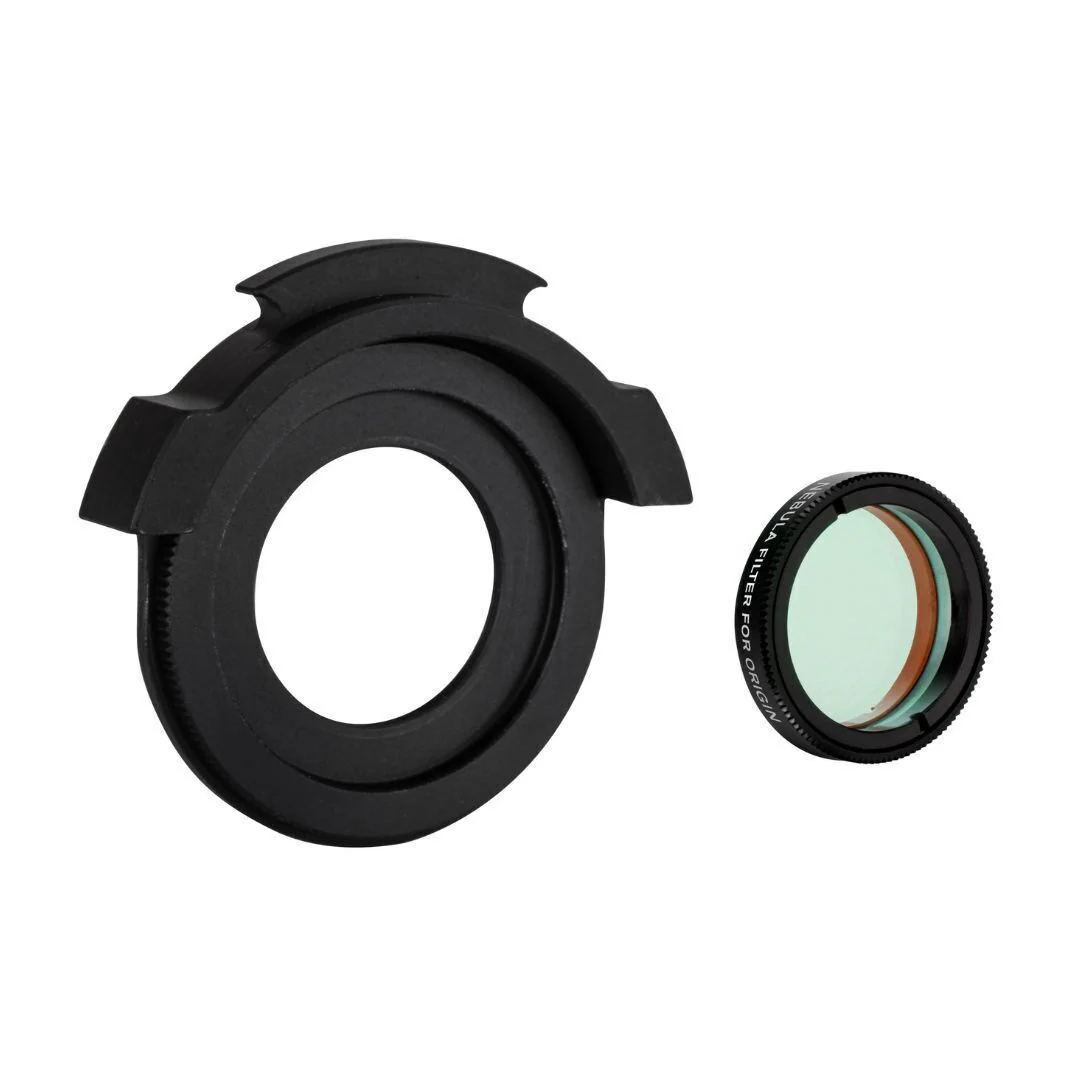
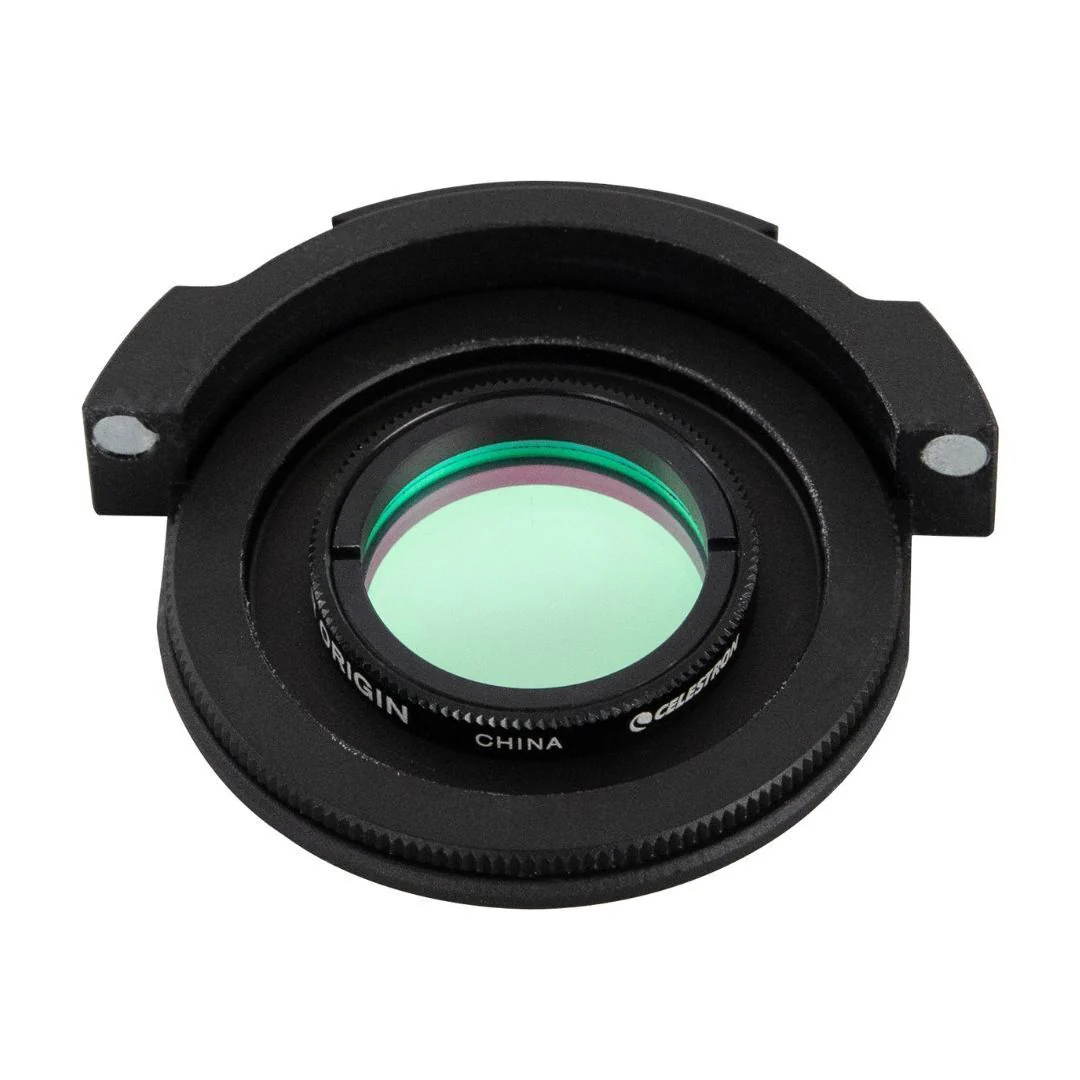
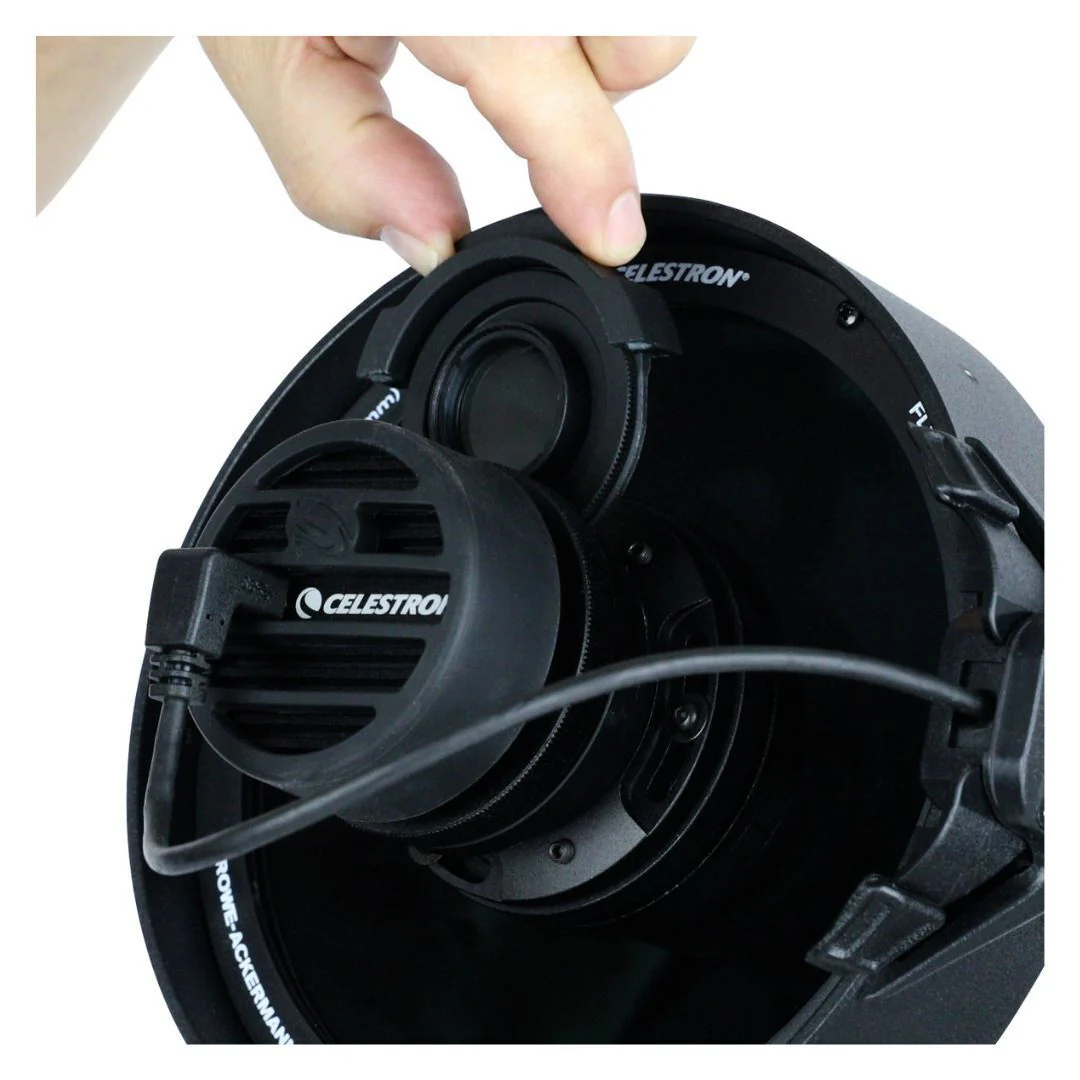
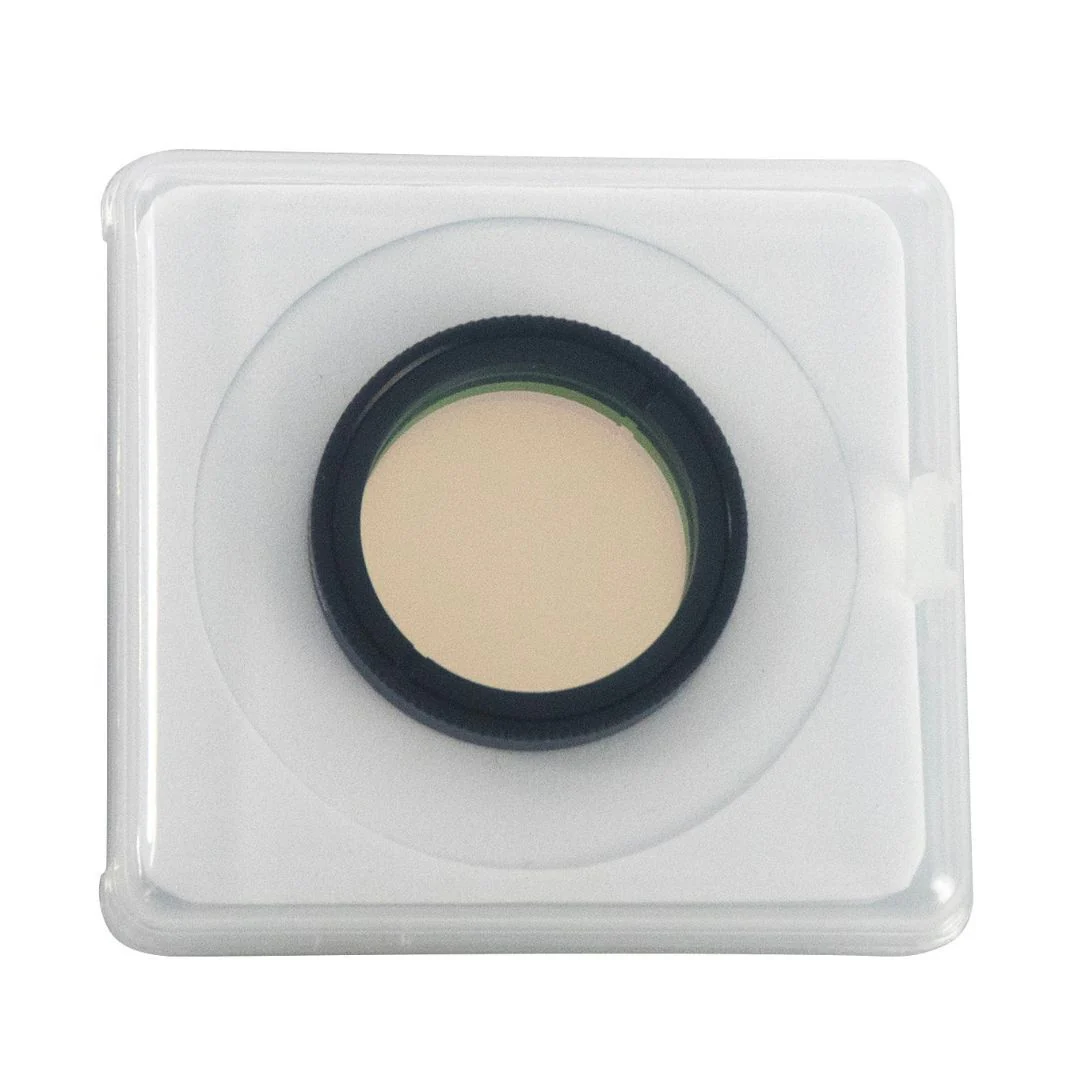
The filter features a machined aluminum black anodized cell with a knurled rim for easy grip during installation. It has anti-reflection coatings to help suppress reflections on the glass. The filter fits directly into the filter drawer in the Celestron Origin’s front lens cell, where the optical window sits. Simply remove the clear window and replace it with the filter. Origin maintains its optical performance across the entire system with the filter installed. No other adapter is needed. Each filter comes with a foam-lined plastic storage case to safely store the filter or the optical window glass that came with your Celestron Origin when not in use. Celestron tests every Nebula Filter for Origin individually to verify its performance. Along with your filter, you will receive a spectral transmission graph showing the results of your filter’s test and verifying it performs as expected throughout the spectrum.
$76.65
Original: $219.00
-65%Celestron Nebula Schott B270 Glass Filter for Celestron Origin Intelligent Home Observatory—
$219.00
$76.65More Images
Celestron Nebula Schott B270 Glass Filter for Celestron Origin Intelligent Home Observatory
Enjoy the most dazzling views of nebulae with your Celestron Origin when you add this H-alpha H-beta OIII (Hα-Hβ-OIII) imaging filter. This specialized filter allows high throughput of light wavelengths in emission nebulae while blocking other wavelengths that could diminish image quality and detail. The result is bright, colorful nebulae images that ‘pop’ with detail against the black sky background. This filter’s surface is 100 percent optically flat and free from defects.
How It Works
Emission nebulae primarily emit at discrete wavelengths of light - Hα at 656nm, Hβ at 486nm, and OIII at 496/501nm. By strategically transmitting only these wavelengths of light and blocking the rest of the spectrum, the filter dramatically reduces the effect of light pollution. The ‘bad’ light is blocked while the ‘good’ light associated with emission nebulae passes through to Origin’s sensor. You’ll immediately notice much higher contrast in your images, especially from your light-polluted backyard. And since the transmission at the critical wavelengths is so high, the nebula will not be dimmed - only the background will be blacker. You’ll also notice some contrast improvement in images of nebulae from darker skies, as the filter serves well in blocking natural skyglow.
Perfect Fit
The Nebula Filter is perfect for imaging emission nebulae like the North America Nebula (NGC 7000), Lagoon Nebula (M8), Orion Nebula (M42), the Carina Nebula (NGC 3372), and dozens more. The imaging filter offers maximum light transmission in the key Hα-Hβ-OIII wavelengths, producing high contrast for emission nebulae like these. The transmission spectrum for the Nebula Filter is 85 percent or greater at key wavelengths (486nm, 496nm or 501nm, 656nm) and less than 0.5 percent transmission elsewhere. As a narrowband filter, it blocks much of the visible spectrum and only lets these specific wavelengths through. Because of this, you should not use this filter while observing or imaging broadband emission objects, such as galaxies and star clusters. For those objects, you’ll achieve the best results by removing the nebula filter and reinstalling Origin’s clear optical window. Other similar imaging filters on the market have much narrower bandpasses at the critical Hα-Hβ-OIII wavelengths. Unfortunately, these filters block much of the incoming Hα-Hβ-OIII light for an f/2.2 optical system like Origin’s 6-inch RASA. This is because a RASA brings light into the filter at a steeper angle, which causes a spectral shift. If you use filters not explicitly designed for use at f/2.2, some of the light from the nebula will be blocked, resulting in a dimmer image. The Nebula Filter for Origin was custom-engineered to work at f/2.2, so none of the ‘good’ light from the nebula is inadvertently blocked by the filter.
Body and Storage
The filter features a machined aluminum black anodized cell with a knurled rim for easy grip during installation. It has anti-reflection coatings to help suppress reflections on the glass. The filter fits directly into the filter drawer in the Celestron Origin’s front lens cell, where the optical window sits. Simply remove the clear window and replace it with the filter. Origin maintains its optical performance across the entire system with the filter installed. No other adapter is needed. Each filter comes with a foam-lined plastic storage case to safely store the filter or the optical window glass that came with your Celestron Origin when not in use. Celestron tests every Nebula Filter for Origin individually to verify its performance. Along with your filter, you will receive a spectral transmission graph showing the results of your filter’s test and verifying it performs as expected throughout the spectrum.
Product Information
Product Information
Shipping & Returns
Shipping & Returns
Description
Enjoy the most dazzling views of nebulae with your Celestron Origin when you add this H-alpha H-beta OIII (Hα-Hβ-OIII) imaging filter. This specialized filter allows high throughput of light wavelengths in emission nebulae while blocking other wavelengths that could diminish image quality and detail. The result is bright, colorful nebulae images that ‘pop’ with detail against the black sky background. This filter’s surface is 100 percent optically flat and free from defects.
How It Works
Emission nebulae primarily emit at discrete wavelengths of light - Hα at 656nm, Hβ at 486nm, and OIII at 496/501nm. By strategically transmitting only these wavelengths of light and blocking the rest of the spectrum, the filter dramatically reduces the effect of light pollution. The ‘bad’ light is blocked while the ‘good’ light associated with emission nebulae passes through to Origin’s sensor. You’ll immediately notice much higher contrast in your images, especially from your light-polluted backyard. And since the transmission at the critical wavelengths is so high, the nebula will not be dimmed - only the background will be blacker. You’ll also notice some contrast improvement in images of nebulae from darker skies, as the filter serves well in blocking natural skyglow.
Perfect Fit
The Nebula Filter is perfect for imaging emission nebulae like the North America Nebula (NGC 7000), Lagoon Nebula (M8), Orion Nebula (M42), the Carina Nebula (NGC 3372), and dozens more. The imaging filter offers maximum light transmission in the key Hα-Hβ-OIII wavelengths, producing high contrast for emission nebulae like these. The transmission spectrum for the Nebula Filter is 85 percent or greater at key wavelengths (486nm, 496nm or 501nm, 656nm) and less than 0.5 percent transmission elsewhere. As a narrowband filter, it blocks much of the visible spectrum and only lets these specific wavelengths through. Because of this, you should not use this filter while observing or imaging broadband emission objects, such as galaxies and star clusters. For those objects, you’ll achieve the best results by removing the nebula filter and reinstalling Origin’s clear optical window. Other similar imaging filters on the market have much narrower bandpasses at the critical Hα-Hβ-OIII wavelengths. Unfortunately, these filters block much of the incoming Hα-Hβ-OIII light for an f/2.2 optical system like Origin’s 6-inch RASA. This is because a RASA brings light into the filter at a steeper angle, which causes a spectral shift. If you use filters not explicitly designed for use at f/2.2, some of the light from the nebula will be blocked, resulting in a dimmer image. The Nebula Filter for Origin was custom-engineered to work at f/2.2, so none of the ‘good’ light from the nebula is inadvertently blocked by the filter.
Body and Storage
The filter features a machined aluminum black anodized cell with a knurled rim for easy grip during installation. It has anti-reflection coatings to help suppress reflections on the glass. The filter fits directly into the filter drawer in the Celestron Origin’s front lens cell, where the optical window sits. Simply remove the clear window and replace it with the filter. Origin maintains its optical performance across the entire system with the filter installed. No other adapter is needed. Each filter comes with a foam-lined plastic storage case to safely store the filter or the optical window glass that came with your Celestron Origin when not in use. Celestron tests every Nebula Filter for Origin individually to verify its performance. Along with your filter, you will receive a spectral transmission graph showing the results of your filter’s test and verifying it performs as expected throughout the spectrum.